Gaudiosi Palace
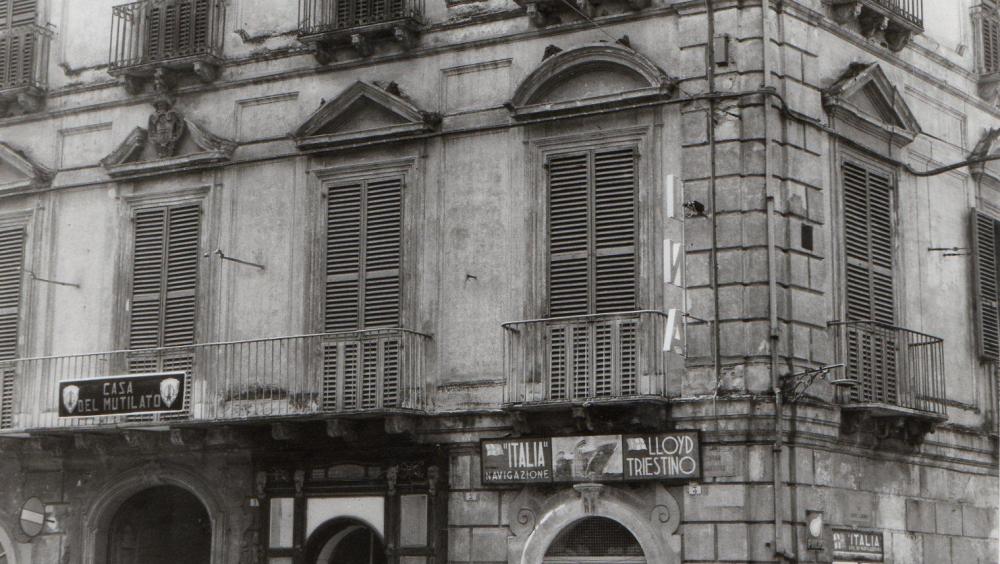
The palace imitates the Branconio palace of L'Aquila of neoclassical style, has a stone portal. On the ground floor we find one of the few examples of ashlar in Penne, on the central window of the first floor there is the coat of arms of the Gaudiosi family. On the main floor there are halls richly decorated by Vincenzo Maria Ronzi in 1841.
Read more
HISTORY
The palace formerly of the Armenians, whose weapons are in the splendid inner courtyard, passed to the Gaudiosi at the end of the seventeenth century. Renovation carried out by Evangelista Gizzarelli of Pescocostanzo in 1845. Salons painted in tempera by Ronzi.
LOCALIZATION
The palace is located in the district of Piedi at the corner of Via Dante alighieri and Piazza Luca da Penne, bordered by the ancient Porta della Piazza and the hospital of the rosary now disappeared.
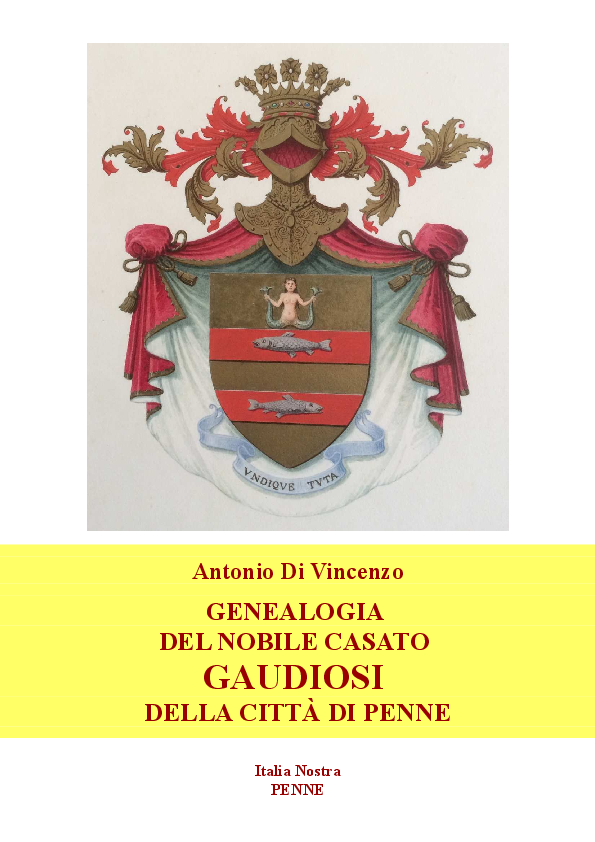
In Penne, the main residence of the Gaudiosi is the palace located in Piazza Luca da Penne. The building, "typical post-Baroque stately construction", built by Evangelista Gizzarelli of Pescocostanzo, replaced the palatial house of the Armenians, described in the Land Registry of 1600 as confined to the hospital of the Confraternity of Ss. Rosario and Annunziata. The building, which is spread over three floors, has on the main floor the openings of the balconies surmounted by triangular and semicircular gables alternating with each other. On the tympanum of the central balcony is placed the coat of arms of the family, in which the main figure consists of the bicaudate mermaid, heraldic symbol of eloquence and persuasion. The central portal leads to the entrance hall which, consisting of various bays with cross vaults, precedes the open courtyard in which the staircase that leads to the upper floor develops. Walking along it, you can see, walled on the wall, the Armeni coat of arms: tower armed with cannons on the trimonzio with the motto UNDIQUE TUTA (From every side defense). Entering the vestibule, distorted by a partition, painted on the frame of a door appear the coats of arms Gaudiosi and Scorpione, juxtaposed together, to remember the marriage of Domenico Gaudiosi and Margherita Scorpione De Sterlich, which took place in the mid-eighteenth century. The various rooms that follow, used in the past to house the collection of castellan majolica of the Gaudiosi family, present a valuable pictorial decoration of the vaults, executed dry by the local painter Vincenzo Maria Ronzi in 1841. The subject of the paintings is predominantly mythological. In one of the rooms you can admire The Triumph of Truth and in the main hall (gallery) Psyche that is led into Olympus by Hermes. In an overhang of this last hall a painting portrays Apollo with dying Hyacinth, inspired by the famous detached fresco by Pinturicchio, which is located at Palazzo Farnese in Rome. On the overdoors of the other rooms, in addition to bucolic scenes, are also painted views of Italian cities: Naples, Venice, etc. The Venetian mosaic floor, also called terrazzo, was executed in the mid-nineteenth century by the Friulian master terracers. In the building, always on the level of the main floor, there is also the elegant private oratory dedicated to the Immaculate Virgin. In the 70s of the last century the noble floor of the building became the headquarters of the local association Fighters and War Veterans. Later it was acquired by Brioni, currently still the owner. Profile of Antonio Di Vincenzo. Opening of the building to visitors on Sunday 26 September 2021 from 9.30 to 17.00 with a final conference at 18.00 at the Council Chamber of the Municipality of Penne.
I